Why we're building a global airspace sensor network
Most airspace is poorly monitored or not monitored at all. We are building the sensing network needed to change that—and eventually support machines operating throughout the physical world.
01Low-altitude airspace is poorly monitored or not monitored at all
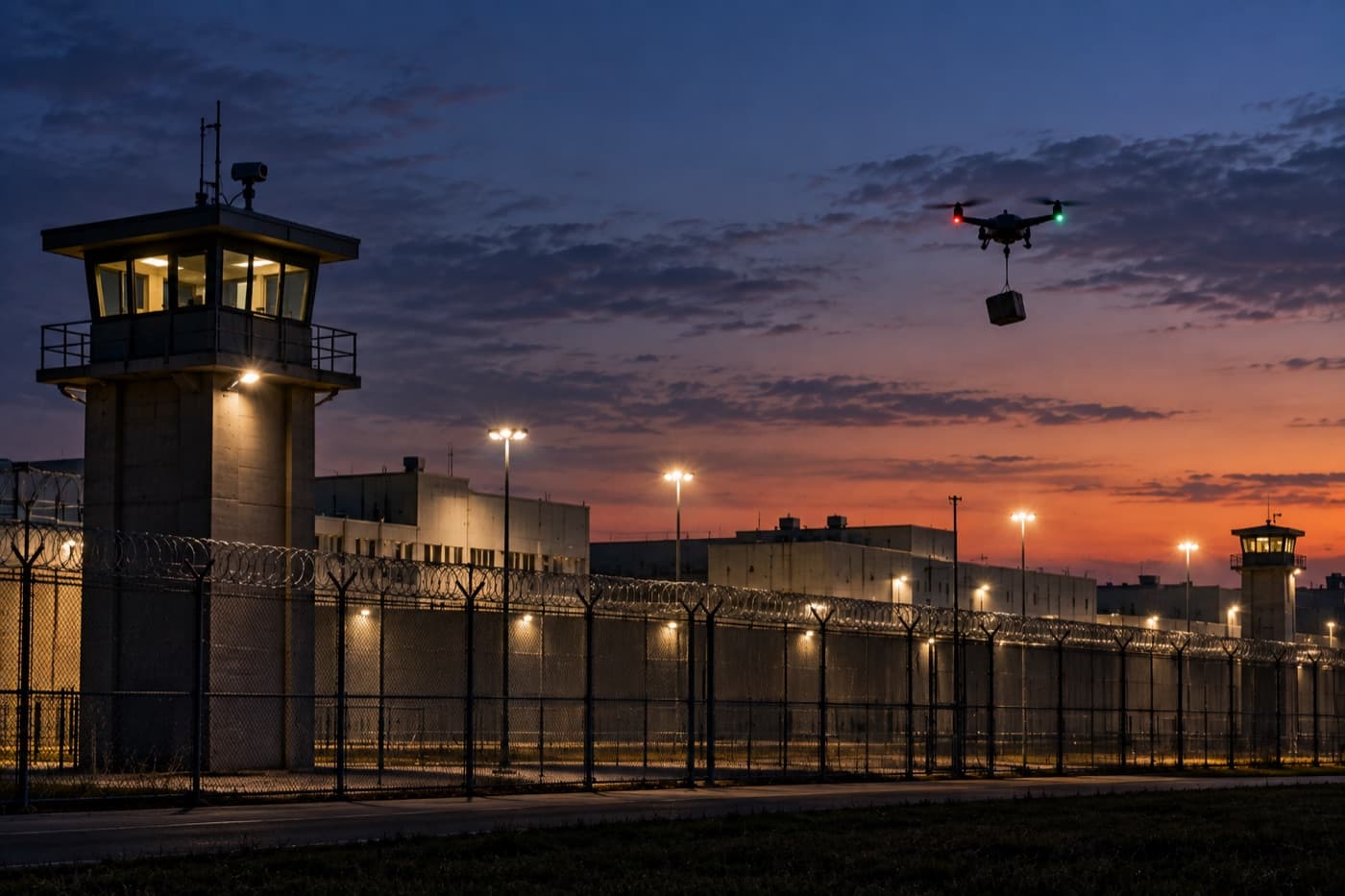
Most commercial aircraft broadcast their identity and position. Many other things in the sky do not. Drones, birds, balloons, meteors and aircraft flying without a transponder all share the same low-altitude airspace, but there is no comprehensive equivalent of air traffic control watching them.
For an airport, power plant, correctional facility or large event, that gap matters. Most operators need to begin with reliable detection and tracking, but conventional systems are often too expensive, too slow to deploy or simply a poor fit for the site.
02We built the system we wanted to deploy
We built and deployed a weatherproof sensor node for continuous local airspace monitoring. It detects and tracks flying objects at the site and can operate independently.
When connected, nodes contribute track data to the network. If multiple nodes see the same object, the network combines those views into a 3D trajectory in real time. Each added node also extends coverage and creates new views for the network.
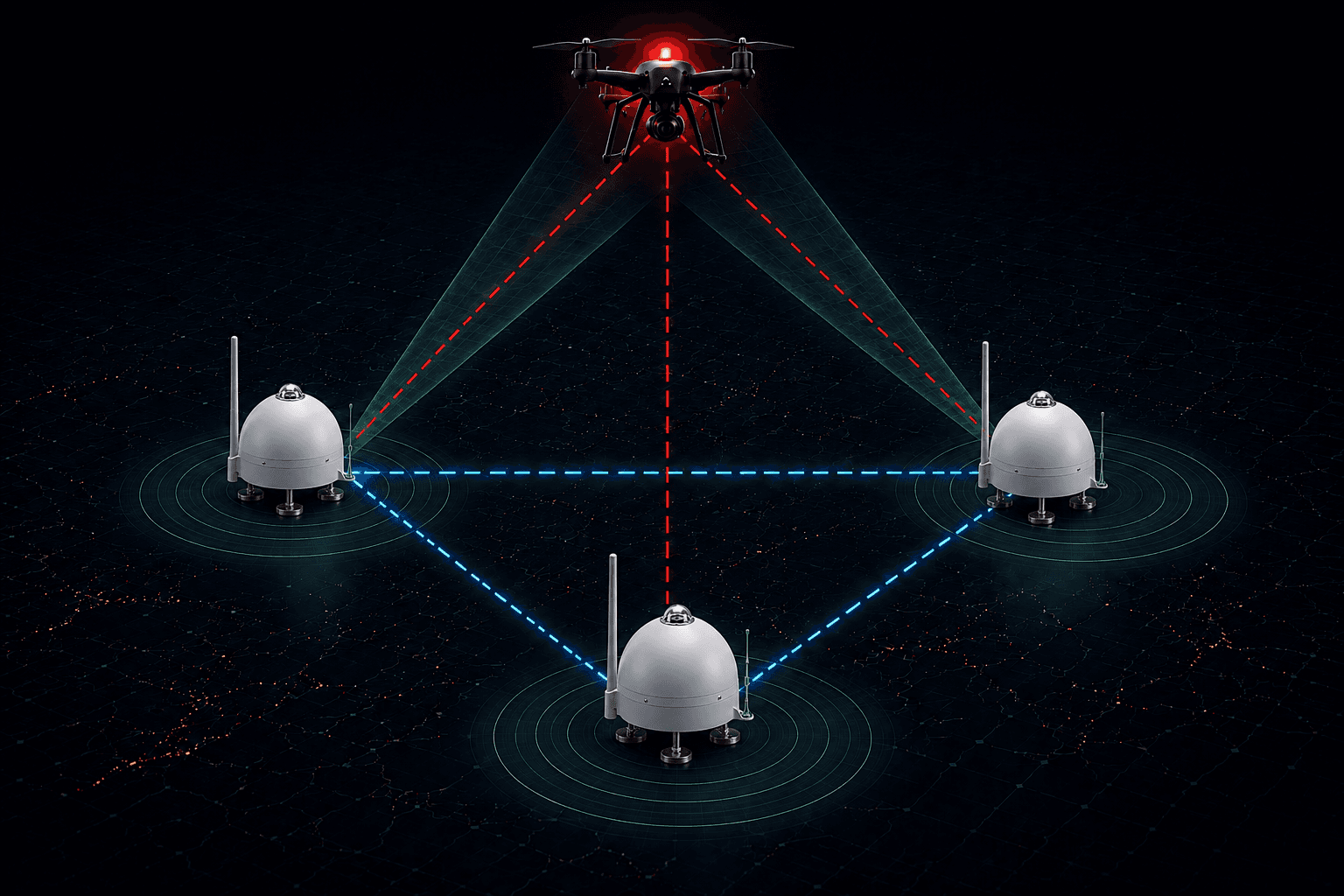
The same node can also run independently and join the network later without changing the hardware.
03Why now
We think the timing is unusually good for four reasons.
- The problem has become harder to ignore. Drone incidents disrupted major European airports in 2025 and exposed persistent gaps in low-altitude monitoring.
- Most customers have to start with detection. Remote ID does not cover every drone. For many non-federal sites, detection, tracking and documentation are the first practical steps.
- The economics now support distributed sensing. Real-time processing has become compact and affordable enough to deploy across many sites.
- Money is moving into the category. Industry estimates place the 2025 counter-UAS market between $3.0B and $6.6B, with the high estimate reaching $20.3B by 2030.
04We are starting where the monitoring gap matters most
Our primary markets are airports and critical infrastructure that need persistent detection and tracking without the cost and complexity of conventional radar. The same need exists at large-scale events, correctional facilities and other large areas of land.
That is the entry point, not the whole ambition. As drones, robots and autonomous vehicles become more common, they will need trusted information about what is moving around them. Infrastructure operators, insurers and defence systems will need the same thing. We want the network to become a continuously updated, machine-readable picture of low-altitude airspace.
The important part of the strategy is that the first market helps pay for the sensors that create the larger data product. We do not need to build a global network before anyone finds it useful.
05The business model follows the network
We expect revenue to develop in three layers. First, customers buy the hardware. Second, they pay for monitoring, alerts and access to the wider network. Third, as coverage grows, the airspace record itself becomes useful to other machines and organisations.
We do not assume the enclosure is a moat on its own. Defensibility grows with a calibrated network and the history it collects. A competing node can be built. Recreating network coverage and accumulated data takes time.
If this is a problem you are interested in, we would be glad to share the deck and talk through what we have built. Write to founders@freakingaliens.com.