The field instrument behind each node
Built to watch the sky continuously, make sense of what it sees on site and contribute precise observations to the global network.
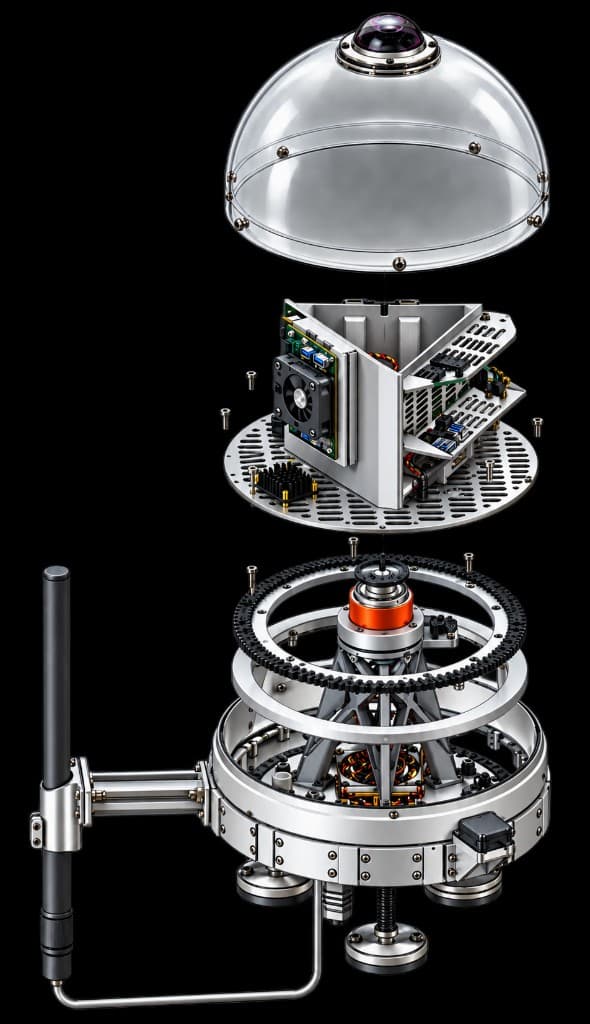
Several jobs, one field-ready system
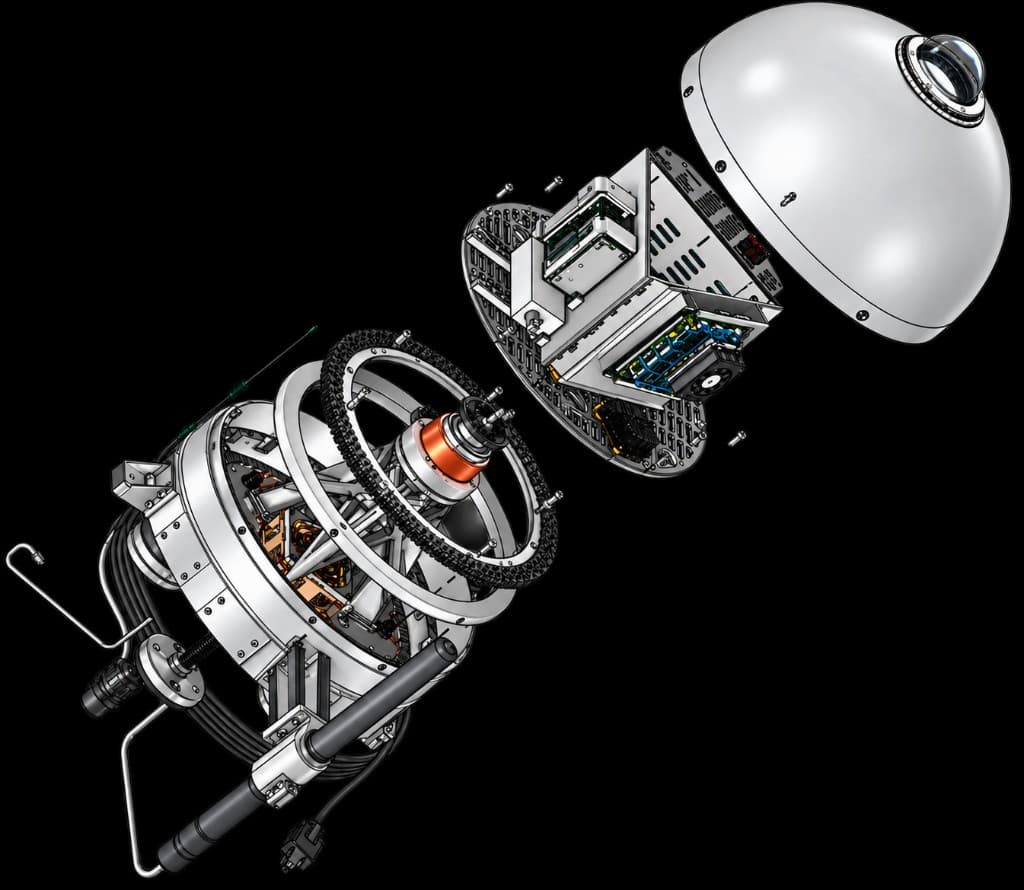
The node brings observation, timing, orientation, local processing, power and communications into a single enclosure. The exact components can change; these functions are the important part.
A wide view of the local sky
Passive inputs observe both cooperative traffic and objects that do not identify themselves.
Every observation has context
The node knows where it is, which way it is pointing and precisely when each observation was made.
Tracks are produced on site
Raw observations become detections, classifications and continuous tracks on the node.
Made for remote locations
The system can operate away from fixed power and conventional wired connectivity.
Protected, serviceable and stable
The enclosure keeps the observation geometry fixed while protecting and cooling the electronics inside.
From local observation to usable track
Each node processes what it observes locally. If it joins the network, it contributes track data to the shared picture.
- 01
Observe
Collect a continuous, time-aligned view of the sky above the site.
- 02
Calibrate
Use known references to keep position, orientation and timing accurate.
- 03
Detect and track
Find objects, classify them and follow their motion from frame to frame.
- 04
Contribute
When connected, share track data—time, direction, motion and confidence—with the network.
Designed for deployment, not installation projects
Set up quickly
A node can be placed, powered and brought online without trenching or a long integration project.
Operate remotely
Calibration, health and software can be managed without someone standing beside the unit.
Run independently
A node can keep detecting and tracking when it is not connected to the wider network.
Grow one site at a time
Each deployment is useful by itself. Connected deployments also add another view to the shared picture.